
Early Life: Birth and Childhood
This overview of George Washington’s family life traces his upbringing, marriage, and household from childhood through his years at Mount Vernon. George Washington was born on February 22, 1732, at Popes Creek Plantation in Westmoreland County, Virginia. Under the calendar in use at the time, his birth date was recorded as February 11, 1731; Britain’s 1752 adoption of the Gregorian calendar shifted the date to the one celebrated today. He was the eldest of six children born to Augustine Washington, a tobacco planter and part-owner of an ironworks, and his second wife, Mary Ball Washington. Augustine had four surviving children from his first marriage, to Jane Butler, including George’s much older half-brother Lawrence.
Early Loss and Self-Education
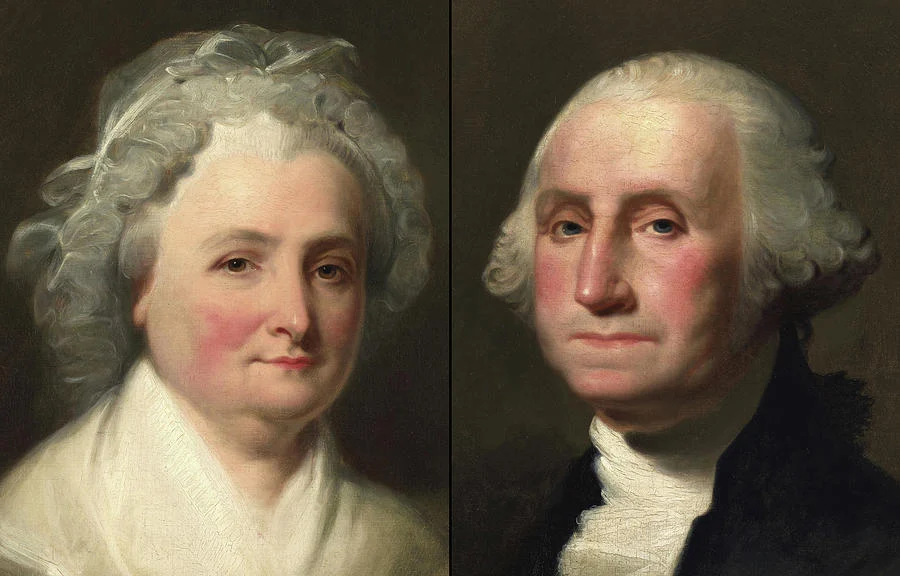
Augustine Washington died in 1743, when George was only eleven years old, and the loss reshaped the rest of his life. Under the inheritance customs of the day, Washington’s elder half-brothers received the best land, the largest share of the estate, and the English education their father had been able to afford them. George instead inherited a smaller property near Fredericksburg and ten enslaved people, while his mother retained the legal use of his inheritance until he came of age. Denied the schooling in England that his half-brothers had received, Washington was largely self-taught. He studied practical subjects such as mathematics and surveying, and he copied out a set of etiquette maxims known as the Rules of Civility to guide his conduct in Virginia’s status-conscious society.
Lawrence Washington’s Influence on George Washington Family Life
His half-brother Lawrence Washington became a formative influence on the young George. Lawrence had inherited the family’s plantation on the Potomac River, which he renamed Mount Vernon in honor of the British admiral under whom he had served, Edward Vernon. Lawrence’s marriage into the prominent Fairfax family opened doors for George. He was introduced to the Fairfaxes’ social and professional circle, and through them he secured his first employment as a surveyor. When Lawrence contracted tuberculosis, George accompanied him on a voyage to Barbados in 1751 in search of a healthier climate. It was there that George contracted smallpox, which left him with lifelong immunity and faint facial scarring. Lawrence died the following year, and Washington eventually inherited Mount Vernon outright after the death of Lawrence’s widow in 1761.
Marriage and Family Life at Mount Vernon
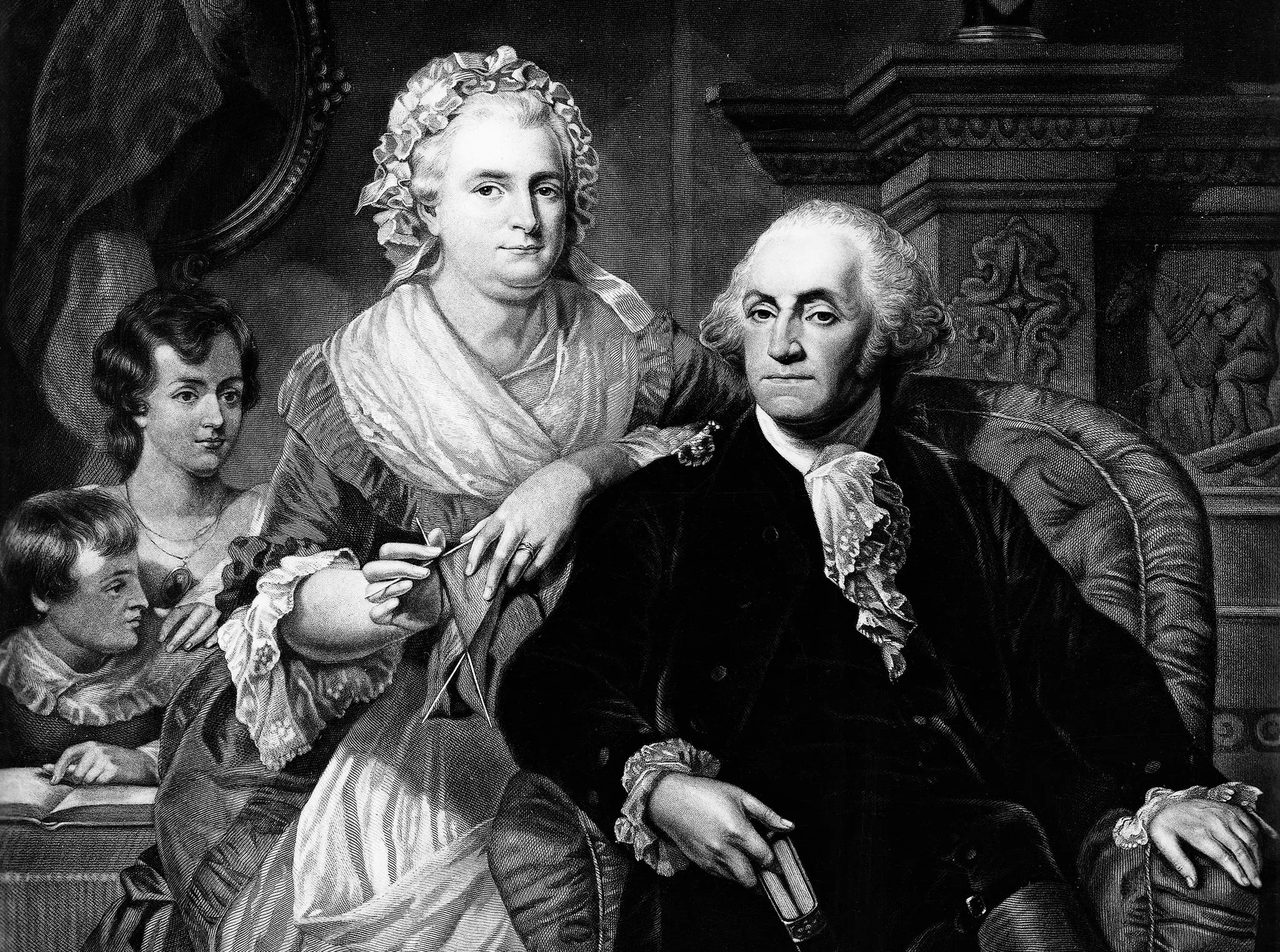
On January 6, 1759, Washington married Martha Dandridge Custis, a wealthy widow with two surviving children, John “Jacky” Parke Custis and Martha “Patsy” Parke Custis. Washington and Martha never had children of their own, but he adopted her children as his own and later helped raise two of her grandchildren as well. The marriage brought Washington considerable wealth and social standing. The couple settled into life at Mount Vernon, which Washington expanded and improved over the following decades into one of Virginia’s most admired estates.
Family Losses
The family experienced deep personal loss. Patsy Custis suffered from epilepsy and died in 1773 at the age of seventeen. Jacky Custis died of “camp fever” in 1781 while serving as a civilian aide to Washington during the Yorktown campaign, leaving four young children. Washington and Martha subsequently raised two of Jacky’s children, Eleanor “Nelly” Parke Custis and George Washington “Washy” Parke Custis, at Mount Vernon. They grew up there alongside a rotating household of nieces, nephews, and other relations. Washington’s mother, Mary Ball Washington, lived until 1789, dying in Fredericksburg just months after her son’s inauguration as president. Martha Washington survived her husband, dying at Mount Vernon on May 22, 1802.
These family bonds shaped George Washington’s family life long before and during his presidency, and the discipline he learned at Mount Vernon carried into his military career.